Ancestry + Heritage
Resources to expand and enhance our perception of those who came before us.
Seeking out connection with one’s heritage is a beautiful and challenging endeavor. History is full of people, and people are, well, we’re complicated. Something that I’ve found to be helpful as a starting point is to reach beyond the bullet points of historical events and instead learn about ancient practices.
As I’ve studied the work of archeologists and anthropologists, I’ve felt powerfully connected to the humanity that came before me, which then added perspective and meaning to the research I’ve done since. Below you’ll find my favorite books that have had this effect for me.
1. When They Severed Earth From Sky by Elizabeth Wayland Barber and Paul T. Barber
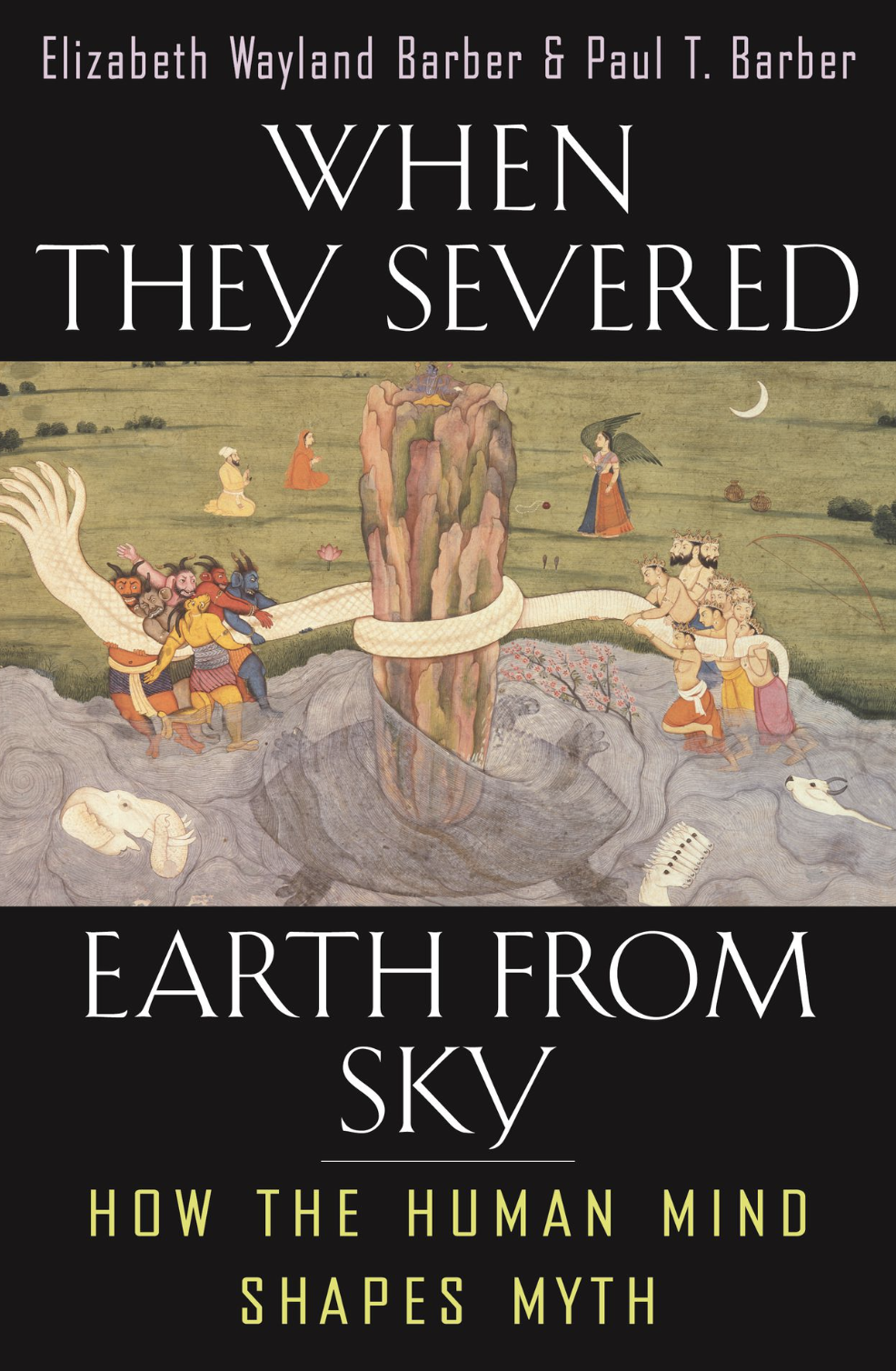
Publisher’s Summary:
This absorbing book shows that myths originally transmitted real information about real events and observations, preserving the information sometimes for millennia within nonliterate societies. Geologists' interpretations of how a volcanic cataclysm long ago created Oregon's Crater Lake, for example, is echoed point for point in the local myth of its origin. The Klamath tribe saw it happen and passed down the story—for nearly 8,000 years.
We, however, have been literate so long that we've forgotten how myths encode reality. Recent studies of how our brains work, applied to a wide range of data from the Pacific Northwest to ancient Egypt to modern stories reported in newspapers, have helped the Barbers deduce the characteristic principles by which such tales both develop and degrade through time. Myth is in fact a quite reasonable way to convey important messages orally over many generations—although reasoning back to the original events is possible only under rather specific conditions.
Our oldest written records date to 5,200 years ago, but we have been speaking and mythmaking for perhaps 100,000. This groundbreaking book points the way to restoring some of that lost history and teaching us about human storytelling.
My Thoughts:
A much-needed introduction to a new way of thinking for the Western mind—oral histories and mythology as a reliable source of information. Elizabeth and Paul Barber are academics in the field of archeology and linguistics and share examples from mythologies around the world. The literature major in me loved seeing stories analyzed as scientifically valuable data, and reconsidering the importance of the stories that have survived from my ancestors’ homelands has been a beautifully spiritual endeavor for me as well.
2. Women’s Work by Elizabeth Wayland Barber
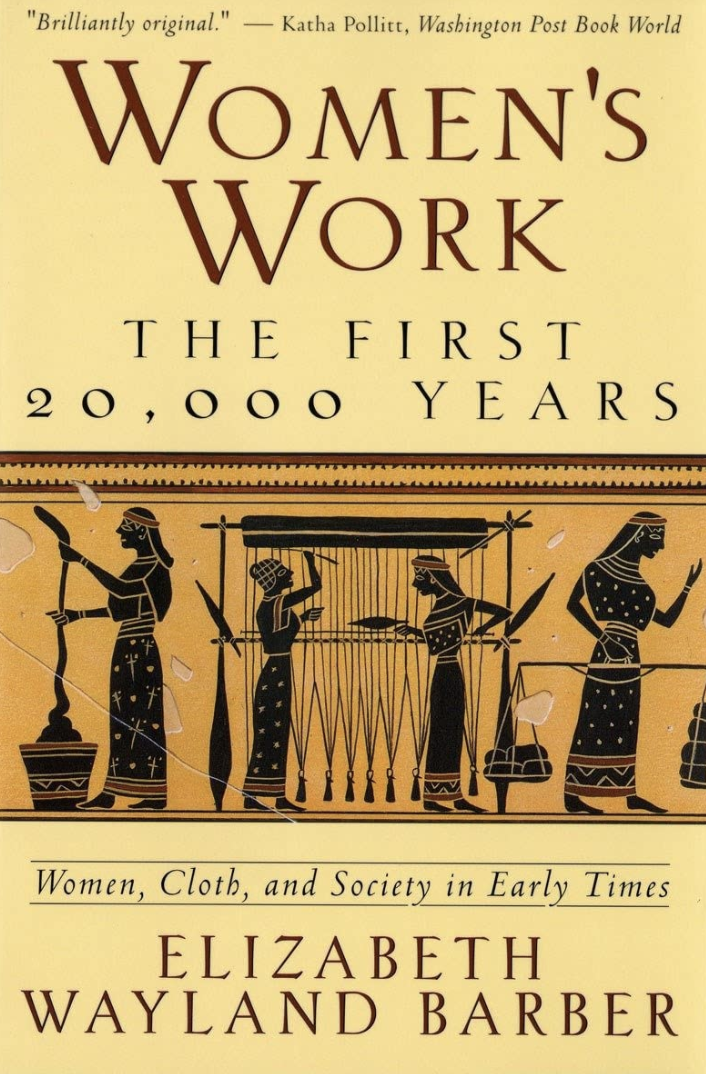
Publisher’s Summary:
Twenty thousand years ago, women were making and wearing the first clothing created from spun fibers. In fact, right up to the Industrial Revolution the fiber arts were an enormous economic force, belonging primarily to women.
Despite the great toil required in making cloth and clothing, most books on ancient history and economics have no information on them. Much of this gap results from the extreme perishability of what women produced, but it seems clear that until now descriptions of prehistoric and early historic cultures have omitted virtually half the picture.
Elizabeth Wayland Barber has drawn from data gathered by the most sophisticated new archaeological methods—methods she herself helped to fashion. In a "brilliantly original book" (Katha Pollitt, Washington Post Book World), she argues that women were a powerful economic force in the ancient world, with their own industry: fabric.
My Thoughts:
While Elizabeth Wayland Barber is a scholar, she’s also a fiber artist herself, and her insights are a refreshing blending of her experience with both. Because of her hands-on knowledge, she makes discoveries about ancient methodologies that were missed by other scholars without her expertise. This book offered a beautiful insight into what life might have been like for my female ancestors, and brought a deeper sense of meaning and connection into my own practice of fiber art creation.
—//—
As part of my Resource Index series, I consider this article a living document and may update it as I find other relevant resources that have staying power over time. To hear more about what I’m reading in real time and to support my work, please consider subscribing below.
Note: I will always promote the use of public libraries first. I firmly believe in the importance of a good library in every community, and the more a library is used the more resources will be allocated to it. (An actual embodiment of an abundance mindset!) I also include direct Bookshop links to each book for your convenience. If you decide to add any of these books to your personal library through these links, your purchase will also go to support local bookstores and my writing. However you acquire your books, thank you for engaging in these topics with me!